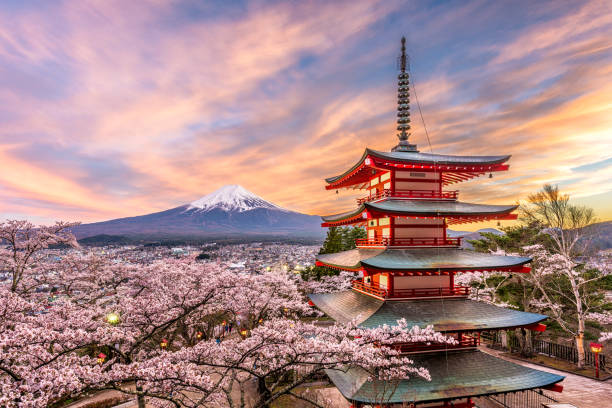
Japan rarely tops the list when Indian families sit down to discuss study abroad. Canada, Germany, Australia — those tend to get all the attention. But quietly, over the last decade, Japan has built one of Asia's most credible education destinations, and Indian students who've been there often say it changed how they see the world — and themselves.
Entry & Language Requirements
Japan doesn't make IELTS compulsory across the board. Many universities accept TOEFL iBT (usually 72–80+), while some — especially those with fully English-taught programs like Waseda, APU (Ritsumeikan Asia Pacific University), or Sophia — run their own admissions screening. For Japanese-medium programs, a JLPT N2 is typically expected.
Here's the honest part: knowing Japanese isn't just an academic requirement — it shapes your entire experience there. Even reaching N4 or N5 before you go makes a noticeable difference in daily life, housing, and making friends outside the international student bubble. Most universities offer free or subsidised Japanese language courses once you're enrolled.
? JLPT N3 or above gives you a significant advantage when applying for jobs in Japan after graduation. It's worth starting lessons before you even land.
Tuition Fees — In Indian Rupees
| National University | Private University | Language School |
| ?3.2L – ?3.5L/year | ?4.2L – ?7.2L/year | ?2.4L – ?3.6L/year |
| e.g. Tokyo, Osaka, Kyushu | e.g. Waseda, Keio, APU | Pre-degree Japanese prep |
These numbers are genuinely competitive. A degree from Osaka University or Tokyo Institute of Technology at ?3–3.5 lakh a year is a fraction of what equivalent programs cost in the UK or Australia. The MEXT scholarship — Japan's government-funded program — covers tuition entirely and gives you a monthly stipend of around ?9,000–10,000, which covers most living expenses outside Tokyo.
Monthly Living Costs — City by City
Tokyo ?72K – ?96K/month Most expensive city
Osaka / Kyoto ?56K – ?72K/month Great value for quality
Fukuoka ?48K – ?64K/month Cheapest major city
Sapporo / Nagoya ?44K – ?60K/month Affordable, quieter pace
Rent is the biggest variable. University dormitories (?8,000–16,000/month) are the cheapest option and worth applying for the moment you get your acceptance letter. Shared apartments run ?20,000–35,000/month depending on the city. Food is surprisingly affordable — a proper meal at a local eatery costs ?250–400, and convenience store meals are decent and cheap. On a student visa, you're allowed to work part-time up to 28 hours per week, which can bring in ?30,000–45,000 a month at Japan's minimum wage.
Best Cities for Indian Students
? Tokyo? Osaka?? Kyoto? Fukuoka? Nagoya?? Sapporo
Tokyo is the default choice — the most international, the most English-friendly, and home to the largest Indian community in Japan. It's expensive, but the networking and career opportunities justify it. Fukuoka is the rising favourite: cheaper, has a startup visa program, and a genuinely relaxed lifestyle. Osaka is culturally vivid and more affordable than Tokyo. Sapporo draws students who want beautiful winters and a calm, focused campus experience.
Weather — Four Seasons, All Real
Japan's climate is a genuine adjustment for most Indians. Summers (June–September) are hot and humid — familiar if you're from Mumbai or Chennai. Winters in Tokyo range from 2–10°C; Sapporo routinely hits -15°C with heavy snowfall. Autumn — October and November — is stunning in a way that makes you understand why the Japanese have a cultural practice of just going out to watch leaves change colour. Budget for a proper winter wardrobe; it's a one-time cost but not a small one (around ?8,000–20,000).
Student Visa Requirements for Indians
You need a College Student Visa , applied for at the Japanese Embassy or Consulate in India. Key documents:
- Admission letter from a MEXT-recognised Japanese institution
- Certificate of Eligibility (CoE) — your university arranges this
- Valid Indian passport (minimum 6 months validity)
- Proof of funds — bank statements or scholarship letter
- Completed visa application form + passport photos
Processing takes 5–7 working days once you have the CoE. Japanese Embassy offices in Mumbai, Delhi, Chennai, Kolkata, and Bengaluru all handle student visa applications. The process is straightforward — Japan's immigration system is methodical, not arbitrary.
Popular Programs Among Indian Students
Most Sought-After Industry Demand
Computer Science & AI
Engineering & Robotics Growing Fast
Business & Management
Design & Japanese Studies Unique to Japan
Engineering and Computer Science dominate — Japan's tech industry is hungry for talent and actively recruiting internationally. APU is consistently popular with Indian students for its 50/50 international-to-Japanese student ratio and English-medium MBA and social science programs. For science and research, the University of Tokyo, Tohoku, and Kyushu have strong graduate programs with lab funding.
Post-Study Work — Can You Stay?
Yes, and Japan has been actively making it easier. After graduating, you can apply for a Designated Activities Visa that gives you 6–12 months to job hunt while legally staying in Japan. Once hired, you transition to a work visa. Japan's Highly Skilled Professional Visa uses a points system — your degree level, salary, age, and Japanese proficiency all count — and can lead to permanent residency in as little as 1–3 years for high scorers.
Companies actively hiring international graduates include Sony, Toyota, Fujitsu, Rakuten, and a growing wave of startups that specifically want people who straddle both Japanese and global work cultures. IT and engineering profiles are especially in demand.
What Japan Actually Has to Offer
Beyond the degree: Japan has one of the lowest crime rates on earth. Public transport is so reliable it feels fictional. The food — even if you're vegetarian, though you'll need to look harder — is extraordinary. And something about the culture, its precision, its quiet discipline, its almost obsessive attention to quality in everyday things, tends to stick with people long after they leave.
For Indian students specifically, there are Indian grocery stores in Tokyo, Osaka, and a few other cities. Hindu temples exist. There's a tight-knit Indian student community that helps newcomers settle in faster than you'd expect.
The honest summary: Japan has a learning curve — the language, the cultural norms, the slightly formal social dynamics. It rewards students who go in curious and open, not just credential-hunting. But for those students, it offers something rare: genuinely world-class education at a price that makes sense, in a country that's safe, functional, and quietly extraordinary to live in.